
If you have never watched a Brazilian Jiu-Jitsu class, the first few minutes might surprise you. Kids are moving across the mats, practicing with partners, and learning how to escape different positions.
It is natural to ask whether all that physical contact is safe for a child.
It is also the right question to ask. Jiu-Jitsu is a contact sport. Like soccer, gymnastics, or other physical activities, it comes with risks. What parents need to understand is how a children's class approaches those risks and whether the instruction fits their child's age.
What children actually practice
Brazilian Jiu-Jitsu teaches movement, balance, positioning, and control. Instead of focusing on punches and kicks, students learn how to work with another person's movement, maintain a position, and escape when they are uncomfortable.
That does not mean four-year-olds and teenagers should train in the same way.
For younger children, a class may involve simple movement games, coordination exercises, and short partner drills. Older students may be ready for more detailed instruction and structured technical practice.
The important part is that the activities match the age, size, experience, and ability of the students taking part.
Why supervision matters more than big promises
No academy can promise that an injury will never happen. A more useful question is what instructors do to help students practice responsibly.
Watch how a coach explains a movement. Notice whether students understand when to start and stop. Look at how partners are matched and how the instructor responds if a child looks confused or uncomfortable.
Good supervision also involves correcting unsafe behavior early. A child should never feel that being rough with a smaller or less experienced partner is something to be proud of.
If you are visiting an academy for the first time, you should feel comfortable asking how beginners are introduced to physical contact.
Children learn that stopping is part of training
Respecting a partner's limits is a basic part of Jiu-Jitsu.
Students learn to listen when an instructor tells them to stop. As training becomes more technical, they also learn the importance of tapping or responding immediately when a partner signals that a movement should end.
For young children, those ideas need to be taught in simple, age-appropriate language and reinforced often.
The lesson goes beyond technique. Children practice paying attention to another person's safety, not just their own success.
How age and experience change the class
A child who is new to organized activities may need time to get used to listening in a group. Another might be confident with movement but unfamiliar with partner exercises.
Neither child needs to arrive knowing Jiu-Jitsu.
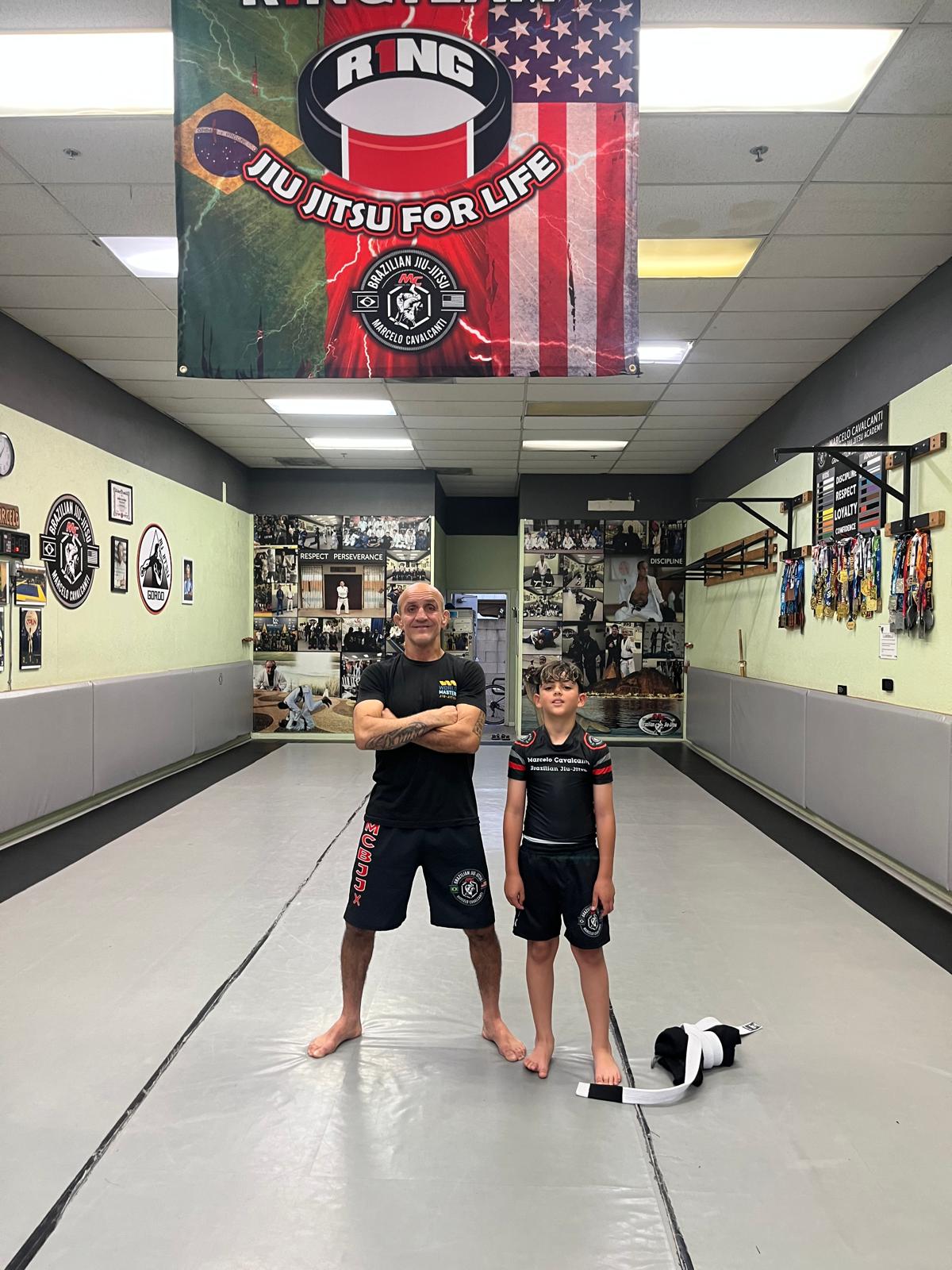
At MCBJJ in Carson, the Kids Program welcomes ages 4 through 13. The academy lists class options for different age groups, and the team can help parents identify an appropriate session before their first visit.
If your child has an injury, medical restriction, or other need that affects participation, discuss it with the academy and the appropriate healthcare professional before training.
What about shy or nervous children?
A child can be interested in Jiu-Jitsu and still feel uncertain on the first day.
They may stay quiet when the instructor asks a question or take a while to feel comfortable practicing with someone new. That is not a sign that they will never enjoy the sport.
The first visit gives parents a chance to see how the instructors welcome beginners. It also gives children a chance to see the space, meet the people, and begin understanding the routine.
Confidence is not something an instructor can promise to give a child. It can grow through repeated, supportive experiences and small moments of progress.
Does Jiu-Jitsu teach children to fight?
Parents sometimes worry that martial arts will encourage aggression. It is worth talking openly about that concern.
Brazilian Jiu-Jitsu introduces physical skills, but responsible children's training should also address self-control, respect, and when to avoid confrontation.
Learning a technique is not permission to use it against a sibling or a classmate. If a child encounters bullying, asking for help from a trusted adult and avoiding a physical conflict remain important.
The goal is not to make children eager to fight. It is to help them learn a physical activity with clear rules and responsibility toward others.
Five questions to ask before enrolling
During your visit, ask the coach how students are grouped by age and experience. Ask how new children learn to work with partners, which rules are used to manage contact, and what happens if someone needs to stop or take a break.
It is also reasonable to ask what the first class will look like for your particular child.
A good conversation with the team should leave you with a clearer picture of the program rather than a list of guarantees.
The best way to understand a children's Jiu-Jitsu class is to visit and see how it works. MCBJJ welcomes children ages 4 through 13 at its Carson academy. The first class is free, and no previous Jiu-Jitsu experience is required to request a visit.
Explore Training in Carson
READY TO TRY A CLASS?
Learn more about Kids Jiu-Jitsu Ages 4–13 or request your free first class at MCBJJ in Carson.