
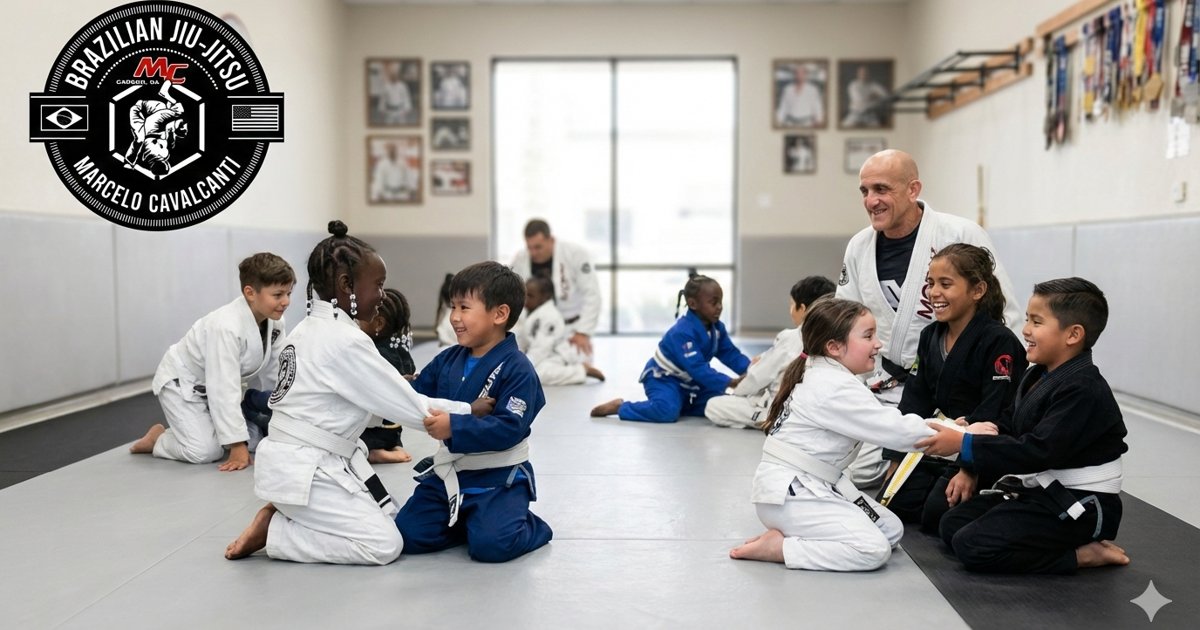
Watch a children's Jiu-Jitsu class long enough and you will see the moments parents naturally notice: a clean escape, a new technique, a child finally getting a position right. Those moments are exciting. They are not the whole story.
Some of the most important progress is harder to spot. A child listens instead of interrupting. They wait for a partner. They try again after a mistake, even when the next attempt is not much better. These are lessons worth making room for.
At MCBJJ in Carson, California, the kids program brings movement, technique, discipline and respect together. For parents, understanding that bigger picture can change how they support their child on and off the mat.
Your child is learning, not racing
It is easy to compare. Another student seems to learn a move faster. One child looks comfortable during drills while yours gets confused. A parent may start wondering whether their child is falling behind.
But children do not learn at the same speed. A good class gives them repeated opportunities to practice. Some days a technique clicks. On other days a child has to stop, listen and try again.
Progress can mean remembering an instruction, staying calm through a difficult drill or showing respect to a training partner. None of those achievements requires a medal or a quick promotion.
Jiu-Jitsu teaches more than physical technique
Jiu-Jitsu is physical, but the classroom is also social and mental. Children practice patience when they wait for their turn, self-control when a partner makes a mistake and attention when the instructor demonstrates a position.
There is a clear structure to class. The instructor is responsible for teaching, setting boundaries and supervising safe practice. Students are responsible for listening, asking questions when something is unclear and treating one another with respect.
That is what healthy discipline and hierarchy look like in a children's class. It is not about intimidating a child or demanding unquestioning obedience. It is about learning who is guiding the lesson and how to participate responsibly.
When parents coach from the sidelines, attention gets divided
Most parents who call out instructions mean well. They want their child to succeed. A quick 'turn your hips' or 'watch your hands' can feel like helpful encouragement.
From the child's perspective, though, two voices may be competing for attention. Instead of listening to the instructor and thinking through the position, the child starts looking toward a parent for the next answer.
Even without speaking, body language can send a message. A frustrated expression, a tense stare or a visible reaction to every mistake may make a routine learning moment feel like a test.
Parents do not need to disappear from their children's Jiu-Jitsu experience. They do need to give the lesson room to belong to the student and the instructor.
Let the instructor teach, then let the child think
A child watches a demonstration, practices the movement and tries to recognize when to use it. Remembering the next step is part of learning, even if the attempt does not work the first time.
When an adult supplies every answer from outside the mat, a child has fewer chances to work through that moment independently. The instructor can correct a movement, adjust the drill and decide when a student needs help.
Over time, children can become more comfortable trying, getting feedback and trying again. The goal is not to leave them struggling without support. It is to let the person teaching the class guide that support.
How parents can support progress without adding pressure
Before class
Help your child arrive ready to listen and participate. A calm start, the right equipment and enough time to settle in can make a difference. If something is worrying your child, tell the instructor privately.
During class
If observation is permitted, follow the academy's designated viewing arrangements and let the instructor lead. Avoid giving technical instructions from the edge of the mat. Save questions or concerns for an appropriate moment with the staff.
After class
Try asking 'What did you learn today?' or 'What was challenging?' instead of 'Did you win?' or 'Why didn't you get that move?' Listen to the answer before offering advice.
Notice effort, kindness and willingness to return. A child who was frustrated but kept practicing may have taken an important step, even if there is nothing dramatic to report.
Space to learn does not mean ignoring a child who needs help
There is an important difference between giving children independence and expecting them to handle every situation alone. If a child is hurt, overwhelmed or consistently distressed, parents should communicate with the instructor and make a thoughtful decision together.
A supportive environment gives children room to make normal mistakes while still taking their well-being seriously. Patience and safety belong in the same conversation.
The long-term lesson matters more than a quick result
A child may forget a technique next week and remember it a month later. They may need encouragement on one day and more independence on another. That is part of learning something difficult.
Parents can be their child's strongest supporters without becoming another instructor during class. When children are trusted to listen, try and recover from mistakes, Jiu-Jitsu becomes more than a set of physical skills.
If you're looking for kids Jiu-Jitsu in Carson, explore the MCBJJ Kids Class for ages 4 to 13. You can also request a free first class, meet the team and ask how to support your child's learning at home and during visits.
COMMON QUESTIONS
Should I watch my child during Jiu-Jitsu class?
Ask the academy about its observation arrangements. If watching is allowed, choose the designated area and avoid coaching from the sidelines so the instructor can keep the class focused.
How can I tell whether my child is improving?
Look beyond belts and successful techniques. Listening, working with partners, following class rules and trying again after mistakes are also meaningful signs of learning.
Does discipline mean children should never ask questions?
No. Respectful questions are part of learning. Class structure helps children understand instructions and boundaries while giving them opportunities to think and participate.
Explore Training in Carson
READY TO TRY A CLASS?
Learn more about Kids Jiu-Jitsu Ages 4–13 or request your free first class at MCBJJ in Carson.